— by Joelle Alkontar —
The trinity of Russian civilization (Truine Rus) is a key Kremlin narrative, portraying Ukrainians and Belarusians as merely sub-nations of a great Pan-Russian nation. Such a concept greatly appeals to a shared and unified Eastern Slavic and Orthodox heritage. In the context of Russia, the invasion of Ukraine in 2022 has been framed by state narratives as a defensive measure against Western invasion, an opinion that perpetuates the perception of Europe as the rival “other”. The Kremlin has emphasized the alleged existential threat that would accompany the expansion of NATO and EU integration. This narrative is designed to evoke a patriotic feeling among the Russian population, solidifying the distinction between Russia and the collective West. Consequently, Western liberal values are represented as a corrupting force that seeks to undermine traditional Russian values and the cultural autonomy of Russia. Similarly, in the nation of Belarus, one of Russia’s key allies, state-controlled narratives under the authoritarian Lukashenko regime often align with the Kremlin’s narratives, focusing on the historical ties to Moscow while also framing European integration as a threat to its national identity and sovereignty. Despite Belarus’ geographical and historical proximity to Europe, it has often found itself politically and ideologically tied to Russia. As a result, both of these states frame the Western liberal values as dangerous forces that threaten the Slavic, Orthodox, and conservative values that constitute the core of Russian and Belarusian identities. However, it is crucial to note that this East-West opposition is not a recent creation as it has deep origins and historical roots stretching centuries into the past, and this opposition and dichotomy continues to play a major role in shaping Russia and Belarus’s geopolitical identities, foreign policies, and political ideologies. Ultimately, the complicated relationship between these states and Europe is characterized by centuries of fluctuation between admiration and resistance. This essay aims to analyze and examine the historical origins of this East-West dilemma, the role of governmental and ideological narratives in shaping the perceptions of these two nations, and the broader implications of these perceptions on contemporary geopolitical realities.
From a historical point of view, both nations have been influenced by the memories of foreign interventions. The memory of the devastating impacts of Nazi occupation in Belarus continues to shape their national conscience, instilling a sense of skepticism against European powers, who are perceived as imperialist or aggressors. Both Russia and Belarus have experienced the consequences of being subjects of empires. For example, Russia experienced Mongol (Tatar) rule, and Belarus was historically under the Polish-Lithuanian Commonwealth. Several significant historical events played a fundamental role in modeling the perception of Russia in Europe. The Napoleonic wars (1803-1815) are emblematic of the first Russian resistance to European hegemony; Napoleon’s defeat is remembered as a symbol of national pride, strengthening the notion of Russia as a bulwark against Western imperialism. During the Tsarist era, in particular under Peter the Great, the effort to modernize and westernize Russia has favored a paradoxical relationship with Europe. His reforms were inspired by European models, leading to the creation of St. Petersburg as a “window to the west”. Despite these efforts to align with European ideals, a simultaneous sense of superiority has emerged since Russia considered itself the legitimate heir to the Byzantine legacy and the protector of Orthodox Christianity, thus positioning Europe both as an essential contact person and a rival. The perception of Europe as the “other” gained a renewed meaning with the advent of the Soviet Union after the 1917 revolution. The ideological conflict of the Cold War clearly defined the relationship between the USSR and Western Europe by framing Western Europe not only as an opponent and rival but also as a culturally distinct entity. Soviet leadership fueled the idea that Western nations were hostile, trying to undermine the socialist model and violate Soviet sovereignty. The Bolshevik revolution played a huge role in solidifying the division between the west and the east, with Russia positioning itself as the leader of a revolutionary movement for justice and equality, as opposed to the west which it portrayed as imperialist. Belarus, who was a soviet republic, had limited autonomy and sovereignty, and was deeply integrated into the Soviet Union’s economic and political structure, evident in many instances such as Stalin preventing the Soviet republics from benefiting from the US’ Marshall plan, which pledged over 13 billion dollars to aid in the reconstruction of post-war Europe. Hence, these republics were not free to pursue relations with the West. The consequences of the Second World War have further deepened the gap with the huge advance of the Red Army in Eastern Europe. This led to a prolonged perception of Europe as fragmented and susceptible to domination, contrasting with Russia’s self-portrait as the leader of the socialist bloc. During the Cold War, the dichotomies between east and west were further solidified by the “Iron Curtain,” which Winston Churchill described in his 1946 speech. Similarly, economic relations with the West were limited, evident in the establishment of the Council for Mutual Economic Assistance (COMECON) in 1949, a Soviet-led economic bloc to counter Western economic influence, particularly the Marshall Plan. Politically, control was also centralized in Russia, where leaders in Minsk were functioning under direct soviet supervision and oversight. To further solidify its control and ideology, the Soviet Union also played a huge role in cultural propaganda to fuel anti-Western sentiments, portraying the capitalist model as corrupt and exploitative. It did so by banning Western cultural elements such as books and movies. Unlike Ukraine or the Baltic states, Belarus had weaker nationalist movements during this period, which led to a deeper alignment with Soviet ideology.
Culturally, the eastern Slavic identity of Russia and Belarus contributes to the perception of Europe not only as a geographical entity but also as both a model for progress and a cultural rival. Nationalism in both Russia and Belarus further complicates the perceptions of Europe. Russian nationalism, often articulated through the political rhetoric of the Kremlin, promotes a narrative that sees the West’s liberal values as threats to its national and cultural identity. Russia’s national identity has been largely shaped by the idea of national exceptionalism and the belief in a distinct Russian civilization that is separate from the West. Despite the dissolution of the Soviet Union, its legacy further reinforces the idea that Russia must continue to resist Western influence and maintain its sovereign path. In Russia, literary tradition was historically a central means for exploring national identity in relation to Europe. The works of key authors such as Fyodor Dostoevsky and Leo Tolstoy illustrate some forms of a double identity: one that both tries to align with European ideals and, at the same time, criticizes or rejects Western individualism. Dostoevsky, for example, has often described Europe as a moral battlefield, putting the rationalism of the West against the spirituality of the East, often suggesting a sort of superiority in Russian identity. When it comes to Belarus, the article “Belarusians between East and West” by Stephen White, Tania Biletskaya, and Ian McAllister emphasizes the complexity of the Belarusian identity influenced by its ties to both Eastern and Western spheres, where many Belarusians feel a connection to both European and Slavic roots. Belarusian literature, although perhaps less famous internationally, addresses the dilemma of Belarusian national identity. Authors such as Vasil Bykaŭ have captured the complexity of the Belarusian experiences during the Soviet era and the subsequent desire for sovereignty. Bykaŭ’s works depict the harsh realities of war and Soviet repression, highlighting the struggle of Belarusians under an imposed system (the Soviet East). Many of Bykaŭ’s characters face existential dilemmas, torn between loyalty to the imposed system and their conscience or sense of justice. Indeed, Belarus has been historically seen as a buffer zone between Russia and Europe, and Bykaŭ’s narratives, which are often set during World War II, portray Belarus as a battleground for competing ideologies: fascism vs. communism, East vs. West, and survival vs. submission. This continues today, as Belarus remains politically aligned with Russia while a significant segment of its society looks toward European integration. Religion also acts as a critical cultural factor in modeling the perceptions of Europe. The Orthodox Christian tradition, predominant in Russia, promotes a collective identity that emphasizes an antagonistic historical narrative against Western Catholicism and Protestantism. This religious separation has also promoted a sense of uniqueness and cultural mission that is reflected in the Russian nationalist rhetoric, which positions Europe as an opponent that tries to undermine the Slavic and Orthodox values. However, the religious composition of Belarus, where Orthodox Christianity coexists with a strong Catholic presence, complicates the perceptions of Europe. In Belarus, Catholicism can be interpreted both as a link to European identity and as a point of dispute that promotes a double narrative in which Europe is both an ally to seek democratic progression and an opponent to national identity. Another important cultural aspect in both countries is education. In Russia, the educational curricula tend to emphasize the historical narratives that strengthen a sense of exceptionality, often describing Europe as an imperial entity that has tried to exploit and dominate the Russian state throughout history. On the contrary, Belarusian educational narratives in academia explore European integration and reflect a flourishing curiosity about Western values, but combined with a cautious approach that derives from historical oppression under foreign powers. Therefore, it is evident that cultural heritage, literature, religion and educational systems of Russia and Belarus significantly contribute to shaping their perceptions of Europe, where both Russia and Belarus affirm their different identities, rejecting the notion of assimilating completely in the European cultural framework despite the shared historical interactions that have encouraged cultural exchange. Moreover, Slavic traditions, the emphasis on orthodoxy, the folklore of Eastern Europe, and the different languages all reinforce a cultural boundary that delineates “we” from “them”.
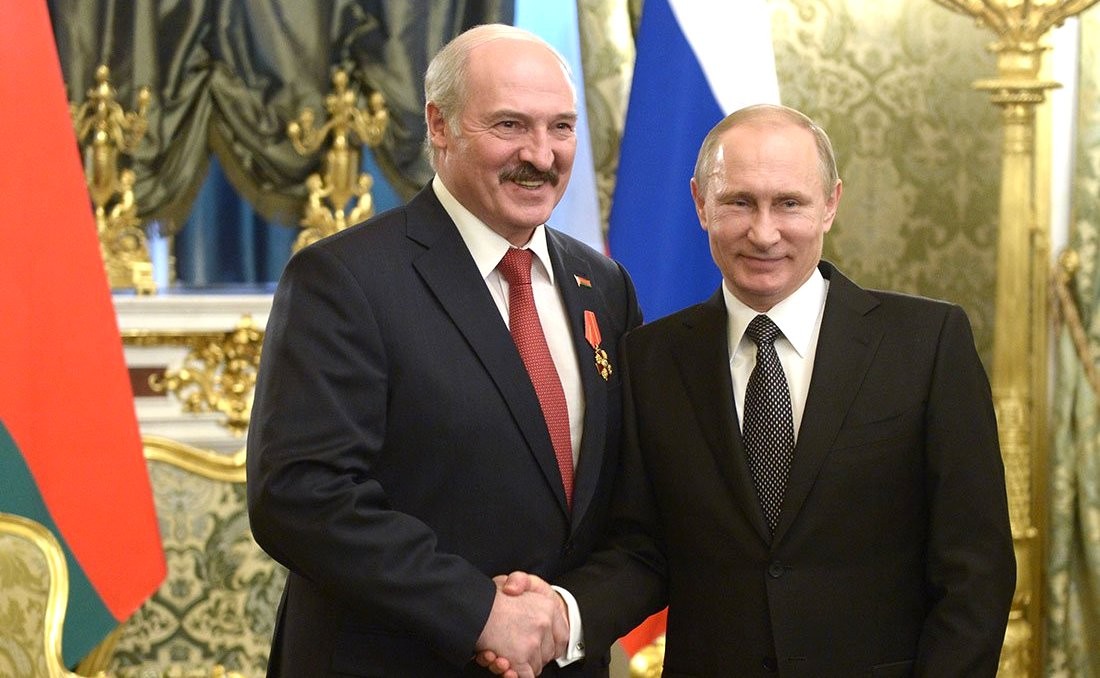
When it comes to the political dimension, the political landscapes of Russia and Belarus were significantly shaped by post-Soviet policies, creating distinct but interconnected perceptions of Europe as “the other”. The dissolution of the Soviet Union in 1991 marked a fundamental change for both nations, with their respective leaders sailing in transition phases that would eventually result in divergent paths in relation to Europe. Russian Political Philosopher Aleksander Dugin, often referred to as “the Putin Whisperer” due to the belief that he has a huge influence on the formation of Russian foreign policy and shaping Putin’s actions, has emphasized in his 1997 book “The Foundation of Geopolitics” the importance of the revival of Russian spirit and Russian identity, an idea referred to as “Eurasianism”, in direct opposition to the west and liberalism. This ultra-nationalist ideology highlights that Russia should embrace this geopolitical uniqueness and dominate both spheres: Asia and Europe. In order to rebuild its power globally, it needs to rely on destabilization, annexation, and disinformation campaigns, and it also considers an independent Ukraine as a hindrance to its ambitions. Moreover, Russia’s relationship with Europe is further complicated by contemporary geopolitical dynamics. Russia’s aggressive and assertive foreign policy, especially after the annexation of Crimea in 2014, underlines its vision of Europe as a region that seeks to undermine its sovereignty and influence through mechanisms such as NATO expansion and the EU’s association with former Soviet states. This antagonistic perception has heavily influenced public sentiments, with narratives and propaganda sponsored by the State that frame Europe as a source of instability. This has also been increasingly spreading to many of the former USSR republics, such as Moldova, which held a referendum in October 2024 on whether it should join the European Union or not. Moscow heavily relies on disinformation campaigns and propaganda, especially targeting the vast Russian-speaking populations of these former Soviet republics, promoting the need to preserve conservative values and distance themselves from the “corrupt” European liberal values. On the contrary, the political landscape of Belarus exhibits a reluctance to align completely with Russia or Europe, attempting to maintain a delicate balance. Due to the authoritarian nature of the state and Lukashenko’s regime, it is observed that the will and actions of President Lukashenko, one of Putin’s key allies, contrast sharply with the will of the Belarusian people. For example, the Belarusian people strongly demonstrate their support for Ukraine and their desire for European integration.
Moreover, the ideologies of different leaders have also played a huge role in both countries. In Russia, Boris Yeltsin’s leadership during the 1990s was characterized by embracing liberal reforms and the desire to integrate into the West, and there was huge optimism for the “democratization” of Russia. However, the subsequent presidency of Vladimir Putin introduced a huge pivot to affirm national sovereignty and portray the West, particularly Europe, as a major rival with malicious intentions. The prospect of Nato expansion and the expansion of the European Union (EU) has further intensified these feelings, usually being framed as a form of neocolonialism, threatening the safety and identity of the Russian state. The narratives built around these geopolitical developments have promoted a nationalist ideology that not only views Europe as the other but also as an adversary whose policies are inherently hostile to Russian interests. On the other hand, Belarus, under the leadership of Alexander Lukashenko since 1994, has maintained a more ambiguous position compared to Russia. Initially, the Lukashenko regime adopted a pro-Russian orientation, strengthening ties with the Kremlin while simultaneously positioning Belarus as a bridge between Russia and Europe. However, the political scenario dramatically changed after the contested elections of Belarus in 2020, which received severe condemnation from Europe as fraudulent- a key event that I will discuss further in the next part of the essay. Hence, Europe’s perceptions in Belarus are characterized by a mixture of resentment, where Europe is seen as a potential source of destabilization, but also aspiration, as many Belarusians admire its democratic governance, which heavily contradicts with the autocratic nature of the Lukashenko regime. In short, perceptions in Belarus are shaped by a complex interaction of rejection and longing for European governance ideals, complicated by its dependence on Russia. The divergence in attitudes towards European integration and democracy between Russia and Belarus is even more pronounced in the context of civil freedoms and human rights. The legal and institutional structures of Russia reflect more and more a deviation from European conventions since the government gives priority to state security over the protection of individual rights and freedoms, rejecting criticisms and labeling them as Western propaganda. While Belarus also has repressive tendencies, the regime’s paternalistic approach is often framed in the rhetoric of the need to protect social stability, notions that resonate positively with many in the population, particularly older people and those who are reliant on state support. The government uses the narrative of Western “decadence” to justify its practices, framing its opposition to European rules as a defense of national integrity and unique cultural identity. After the 2020 presidential elections, there were huge protests against the regime of President Alexander Lukashenko. The European Union heavily condemned the government and its suppression and provides ongoing support to the Belarusian opposition, which further highlights the division between Belarusian civil society and the increasingly authoritarian government. This duality indicates that, unlike Russia, where state narratives perpetuate a more monolithic vision of Europe, Belarusian civil sentiments reflect a growing affinity for European values, especially given the aspirations of democratic governance and human rights. The responses to these developments highlight the critical differences and commonalities in the way both Russia and Belarus perceive Europe.
Overall, both countries exhibit deep skepticism towards European intentions, but this skepticism manifests in different ways. In Russia, as discussed previously, the narrative is predominantly formed by state-controlled narratives that demonize the West, while in Belarus, segments of society are increasingly engaging with European ideals, although in the midst of strong political repression. Consequently, while much of the Russian public largely embraces the antagonistic representations of Europe, segments within Belarus seek to challenge these perceptions, aspiring to a closer alignment with European democratic standards. In addition, international responses to the political climates of both nations complicate these perceptions even more. The sanctions imposed by Western nations on Russia after the invasion of Ukraine have reinforced a “siege mentality” among Russian citizens, deepening their distancing from Europe. In Belarus, the EU’s conditional support for democratic movements sometimes offers a vision of hope to protesters but also runs the risk of solidifying the perception of Europe as an adversary, which reinforces the government narrative of a national identity threatened by external forces. In the contemporary political world, understanding these perceptions is fundamental in light of the ongoing tensions and major events, such as the war in Ukraine and the support of the European Union for the Belarusian opposition. These events have not only revived historical tensions but also triggered the re-evaluation of cultural affiliations and prevalent political ideologies in both nations, which further complicates the established attitudes towards Europe. Nevertheless, framing Europe as “the other”, influenced by historical roots, cultural narratives, and political agendas, remains prominent in the public speech and state policies both in Russia and in Belarus. Future research could further explore the evolving nature of these perceptions, particularly in light of demographic changes and the growing impact of globalized communication channels. Investigating the role of younger generations, which often have contrasting opinions and affiliations from the political establishment, as well as the influence of transnational movements, will be a key determining factor on whether these narratives are reshaped or further entrenched in both states.
References:
- Neumann, I. B. (1999). Uses of the Other: “The East” in European Identity Formation (NED-New edition, Vol. 9). University of Minnesota Press.
- Krawatzek, F., & Langbein, J. (2022). Attitudes towards democracy and the market in Belarus: What has changed and why it matters. Post-Soviet Affairs, 38(1-2), 107-124.
- Lukin, A. (2003). Russia between East and West. Brookings Institution.
- Tsygankov, A. (2024). Russia, Ukraine, and the West: From mistrust to conflict. Journal of Slavic Military Studies.
- White, S., Biletskaya, T., & McAllister, I. (2016). Belarusians between East and West. Post-Soviet Affairs, 32(1), 1-27.
- White, S., & Feklyunina, V. (2011). Belarus, Ukraine and Russia: East or West? British Journal of Politics and International Relations.