— by Joelle Al Kontar —
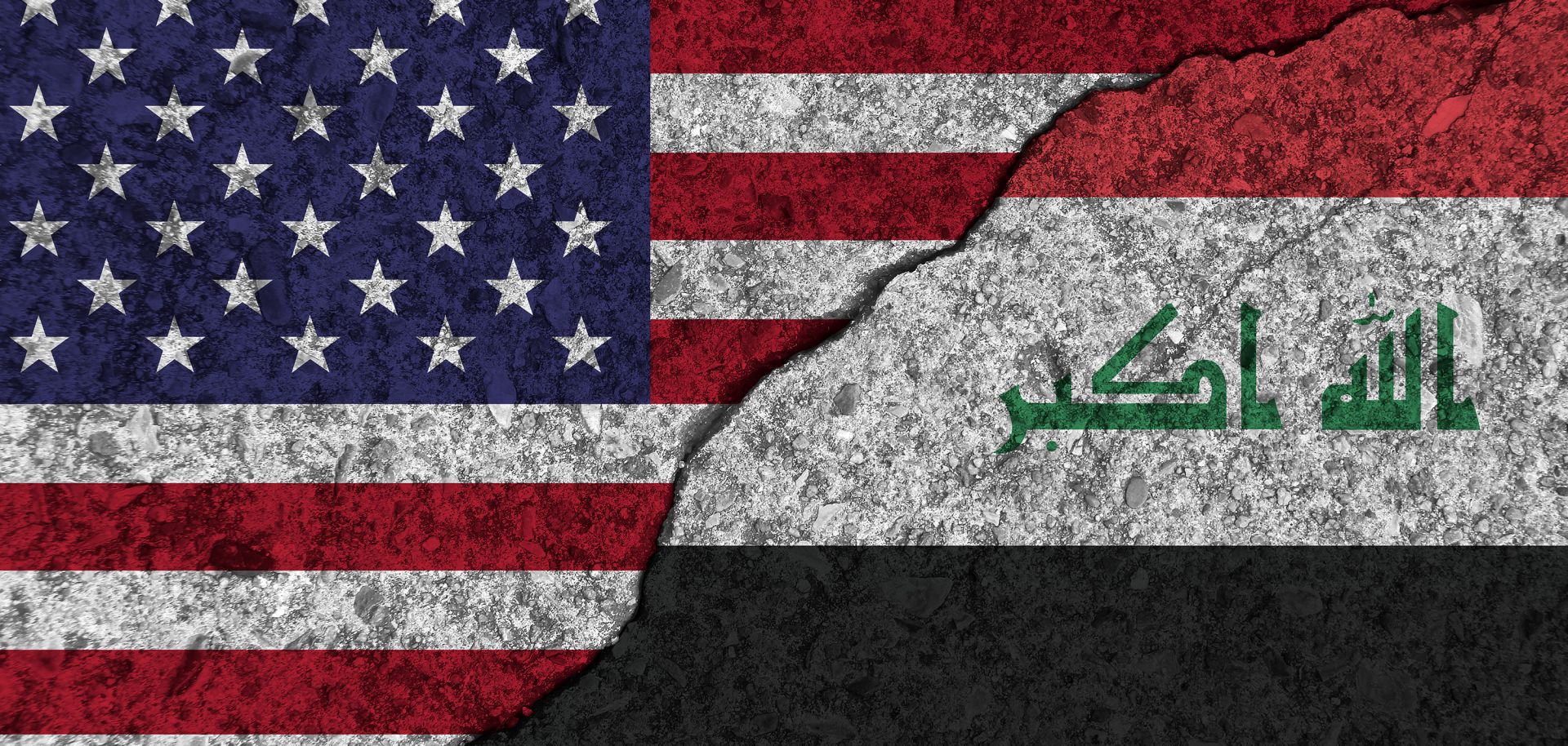
On march 20, 2003 the United States has invaded Iraq by claims of weapons of mass destruction and regime change. In invading Iraq, Bush and his advisers began an era in which the United States renounced the lessons of the Vietnam War, going much further than at any time since the Second World War to use military force. The war is considered one of the most controversial wars and had implications that last to this day, all these years later. In order to properly understand the 2003 invasion, it is worthwhile to go back to years before that. Indeed, there has been longstanding tensions between the United States and Iraq, going back to Iraq’s invasion of the small oil rich nation Kuwait in 1990, where the US-led coalition of 35 nations launched a massive air and ground campaign and were successfully able to expel Iraqi forces from Kuwait. Heavy UN sanctions were imposed, where Iraq was banned from exporting its oil exports, crippling both the Iraqi economy and society as poverty and hunger became widespread. Additionally, under resolution 1441, the United Nations Special Commission (UNSCOM) was tasked with dismantling president of Iraq, Saddam Hussein, of his weapons of mass destruction (WMDs). Saddam has had chemical and biological weapons which he used in his invasion of Iran in 1980 and against his own people in 1988. However, due to lack of compliance and the obstruction of the dismantling efforts by Iraq, the UN withdrew on 1998, and the United States, under president Bill Clinton, announced Operation desert fox, a three-night military bombardment campaign on Iraq’s military facilities. The Iraqi liberation act[1] passed by US congress in 1998, officially made the concept of regime change a US policy as it made it its duty to remove Saddam Hussein’s regime from power and replace it with a democratic one, through supporting Iraqi democratic opposition forces in various ways such as humanitarian assistance to the Iraqi people amidst the democracy transition period. The bill also urged the president to establish an international criminal tribunal to prosecute and imprison Saddam Hussein and any Iraqi officials who committed crimes against humanity and other violations. Although the bill did not authorize military force, the Bush administration later used it to justify the invasion of Iraq in 2003. In 1999, UNSCOM was replaced by the United Nations Monitoring Verification and Inspection Commission (UNMOVIC) which continued disarmament efforts until the 2003 U.S. invasion of Iraq. Building upon the tense history of US-Iraqi relations, my research hypothesis aims to explore if the US invasion of Iraq was justified, and if it succeeded in achieving its intended goals. To answer my research question, I divided my research paper into 3 parts: the first part will cover the background and causes of this invasion. The second part will discuss the invasion itself, and thirdly, its consequences will be examined.
Background and Causes
- 9/11, Afghanistan, and Iraq
On 11 September, 2001, a key turning event occurred that shocked the United States and the international community. Al-Qaeda, a pan-Islamist militant organization and terrorist group led by Sunni jihadists, hijacked two US passenger planes and flew them into both trade centers in New York and one in the pentagon in Washington D.C., killing almost 3,000 people. The idea that the greatest military and economic power in the world could be attacked to that degree on its own shores was unheard of. This attack had made not only the United States but also governments worldwide reassess the real threat of international terrorism. All that has been stated so far leads to the main question, which is: what was the link between 9/11 and Iraq? As it turned out later, there was none. However, according to the US president at the time George W. Bush and his administration, al-Qaeda was present in a number of locations in Iraq. As Deputy defense secretary Paul Wolfowitz stated “Saddam is helping terrorists around the world, and getting rid of him would almost be like cutting off the head of the snake, and the rest of the body will go.”[2] In addition to that, Bush and his administration insisted that Iraq has weapons of mass destruction and that Saddam Hussein’s violations of human rights cannot be overlooked. In other words, Iraq needed saving from its dictator. There was also the popular democratization principle, rooted in idea that a stable democratic US ally could provide a potential counterweight for the influence of Iran in the region and potentially make the entire region friendlier to US interests. On January 29, 2002, in the state of the union address, president George W. Bush infamously referred to Iraq, Iran, and North Korea as states constituting an “axis of evil”, aiming to threaten the peace of the world. The secretary of defense Donald Rumsfeld urged that the United States needed to think more broadly than a war against al-Qaeda and removing the Taliban regime in Afghanistan; it needed to consider other countries that provided safe havens, funding, and support to terrorist activities. In order to successfully protect Americans, he argued, Washington needed to “impede others from thinking that terrorism against the United States could advance their cause.” Vice president Dick Cheney said that the administration’s policy would be to administer “the full wrath of the United States” upon nations providing sanctuary and support for terrorists. The elimination of terrorist safe havens would go beyond physical territory to include legal, cyber, and financial systems that allowed terrorists to operate and prosper. Indeed, President George W. Bush announced the “War on Terror” during a joint session of Congress on September 20, 2001, stating that the campaign aimed to eliminate terrorism globally, with a particular focus on groups like al-Qaeda and nations harboring terrorists. This declaration was followed by military actions starting with Operation Enduring Freedom, the U.S.-led invasion of Afghanistan on October 7, 2001, as the ruling Taliban government was providing a sanctuary to the al-Qaeda leader, Saudi born Osama Bin laden. Hence, the United States had three key objectives in mind: Get rid of Bin Laden, destroy al Qaeda, and dislodge the Taliban. The 2003 invasion of Iraq was justified partly under the “War on Terror” narrative.
2. President Bush’ Unilateral Foreign Policy
Before discussing the events of the invasion itself, it is worth looking into President Bush’s overall foreign policy approach. Leading up to the invasion, the United States’ actions under his presidency had signified a strong unilateral approach. For example, in December 2001, the US announced that it will withdraw from the anti-ballistic treaty[3] of 1972 so that it can build a new missile defense system capable of protecting itself from limited nuclear strikes by “rogue” states. The United States’ National Security Strategy (NSS) 2002 version was particularly significant as it formalized the Bush Doctrine, emphasizing preemptive strikes and the promotion of democracy to combat terrorism. This combination of preemptive action and democratic promotion was central to the Bush Doctrine, the framework for justifying the invasion of Iraq. On September 2002, Congress passed Authorization for Use of Military Force[4], which authorizes the President to use all necessary and appropriate force against those he determines were involved in the terrorist attacks that occurred on September 11, 2001, or those who harbored such organizations or persons, in order to prevent any future acts of international terrorism against the United States. This unilateral approach conflicted with the United Nations approach. On 12 September 2002, Bush made his initial case for the overthrow of Saddam Hussein in a speech to the United Nations Security Council (UNSC), by which he argued that Iraq refused to cooperate with United Nations in its disarmament efforts. This led to the passing of the UNSC resolution 1441, which gave Iraq a “final opportunity” to comply with disarmament obligations and required it to allow UN inspectors to verify the absence of WMDs. Although it did not explicitly authorize the use of force in case Iraq didn’t comply, this resolution became the primary justification for the U.S.-led invasion. In November 2002, UN sent weapon inspectors to Iraq, but they didn’t find any[5]. Still, the United states was not convinced. The following year, in February, US secretary of state Colin Powell, made his case for invading Iraq to the UN security council. He claimed that US Intelligence had concrete proof that Saddam is hiding weapon of mass destruction, and is planning to use them against his neighbors and his own people, and that he has already authorized his field commanders to use them. By March, even though inspections were still ongoing, the US, supported by Britain and Spain, submitted a resolution authorizing the use of force, but faced with a likely veto from France and Russia, the Americans later withdrew the resolution, but the preparations for the invasion still went ahead. Bush’s message to the world on September 12 was “either you are with us, or you are with the terrorists”. When he spoke to the General Assembly in September 2002, his language suggested not that the US needed UN support for military action, but that the UN was being given a last chance to prove its ‘relevance’ and usefulness to the US. In a press conference held on 6 March 2003, President Bush insisted that the US would put the proposed second resolution to a vote ‘no matter what the whip count is’, implying he would feel no compunction about going to war regardless of the outcome. It is also worth discussing the incredible polarization in the international community in response to the prospect of invasion. The world was indeed divided as 14 million people were protesting in almost 800 cities around the world in Asia, Europe, Africa, and the Americas. In addition to that, there was serious polarization between transatlantic allies within Nato. Experts often describe the situation as a “crisis” in transatlantic relations[6], as many US allies, mainly Germany and France, firmly opposed the invasion. For example, former French president heavily citizen many central European countries’ support for the United States, such as Poland and the Czech Republic. Of the 192 countries then recognized by UN, Only UK, Denmark, Australia, and Poland were willing to commit to troops from the start, and there were only 2500 troops committed by the 4 countries combined, compared to 165,000 by the US and the UK. Moreover, it was clear that the invasion would not be another grand multilateral commitment like the Gulf war or the operation in Afghanistan.
Events of the Invasion
Moving on to the invasion itself, on March 18, 2003, Bush gave his infamous ultimatum: a 48-hour ultimatum for Saddam Hussein to leave Iraq under “Operation Iraqi Freedom”. The invasion was launched on March 20, 2003, and Baghdad was attacked with missiles and bombs in an attempt to target Saddam Hussein and bring down the government. According to the US general who was leading the invasion, Tommy Franks, the invasion had 8 main goals[7]: Getting Rid of Saddam, finding and getting rid of WMDS, getting rid and looking for terrorists in the country, gathering intelligence to destroy global terrorist networks, gathering intelligence to find WMDs around the world, ending sanctions and getting humanitarian support to Iraqi citizens presumably hurt under Hussein’s control, securing Iraq’s oil fields “for the Iraqi people”, and helping Iraqi people transition to a representative democracy. On April 9, 2003, American troops stormed Baghdad, and the statue of Saddam was toppled in a symbolic collapse of his government. Finally, Saddam’s home city of Tikrit fell on April 13. Isolated groups of soldiers loyal to Hussein continued to fight in the remaining of days, but by the end of the month the US had controlled basically most of Iraq. The initial invasion cost the lives of nearly 13,000 Iraqis and just 172 coalition soldiers. On May 1st, Bush made his infamous televised speech: “Major combat operations in Iraq have ended, the US and its allies have prevailed.” Furthermore, on December 14, 2003, Saddam Hussein was captured hiding in a bunker and he was executed three years later, on December 30, 2006. Just one year after the invasion on January 2004, the search for WMDs had stopped and it was confirmed that Saddam didn’t have any weapons of mass destruction, and the US justified it as simply an intelligence failure. So the very reason that primarily justified this invasion turned out to be completely false. Also, in 2002, just before the invasion, secretary of defense Donald Rumsfeld assured everyone that the entire invasion and process of democratization would be brief: “Five days or five weeks or five months”. When Bush made that “mission accomplished” speech, little did he and his administration know that this war would go on for next 8 years. The killing of Saddam Hussein, perceived as initial victory, left a huge power and security vacuum, and this allowed extremist and rebel groups to flourish in Iraq. Planning for post-invasion Iraq was widely criticized as insufficient and poorly executed. The U.S. did not have a comprehensive, effective strategy for stabilizing the country after Saddam’s fall. L. Paul Bremer III, head of the Coalition Provisional Authority in Iraq, was appointed on May 11, 2003. By the 16th, he issued his first decree, signing an order disbanding the Iraqi army and intelligence services, sending hundreds of thousands of well-armed men into the streets, coupled with an earlier decision to purge Baathists from the government in the process called “De-Baathification”. As a result, 400,000 Iraqi men were rendered out of a job. These actions proved to have long lasting repercussions, driving the purged to join the extremist groups that will later flourish in Iraq.
Post-Invasion: Unintended consequences
- Insurgencies and the Emergence of ISIS
Soon after Bush’s declaration of victory, the first armed insurgents began to attack American soldiers. Many of the insurgents were Iraqis mad about occupying forces refusing to leave. Kidnapping, murders, car bombs, and suicide bombings became much more common and increasingly put American soldiers at risk. An example of these brutal acts include the incident that occurred on August 19, 2003, where a suicide bomber driving an explosives-filled cement mixer destroyed the UN headquarters in Iraq, killing UN special representative to Iraq, and twenty-two members of his staff. On 2003, leaked footage of American soldiers torturing Iraqi prisoners at Abu Ghraib prison, referred to as the “Abu Ghraib Scandal”[8], led to even more public outrage. This all further exacerbated the flood of Islamic militants into Baghdad. There was no proven connection between al-Qaeda and Iraq before the invasion, but after the invasion, all these incidents have allowed Al-Qaeda to establish a foothold in Iraq, exploiting Sunni resentment against the U.S. occupation and the Shia-majority in the country. On March 31, 2004, Al-Qaeda in Iraq (AQI) mounted a wave of suicide bombings, striking against Shia Muslim holy sites in Baghdad and Karbala. In 2005, there appeared to be a glimmer of hope as it was an election year for Iraq, where Iraqis voted for their first full-term government, giving Shiites majority control of parliament. However, on February 22, 2006 Sunni Muslim extremists destroyed the gilded Shiite shrine in Samarra, unleashing waves of sectarian violence that spread across the country. This sparked the Iraqi sectarian civil war that lasted till 2008. On July 2007, the US government released a report stating that, despite many military campaigns and counter-terror operations against it, al-Qaeda had not only managed to regroup but was, in fact, now stronger than at any time since the 11 September attacks. On January 10, 2007, George Bush announced the “new way forward” in Iraq, known as the surge, where he deployed 20,00 additional US troops to Iraq. Although that ended up being the deadliest year for American forces since 2004, but stability did follow and insurgent attacks went down after wards. Under Obama, almost as soon as American troops left in 2011, power vacuum happened and insurgency was rising again. Sunni extremists stepped up against Shia majority and so many of them teamed up with Islamist extremists in Syria, which had its own civil war. This ultimately led to another war in Iraq where by December 30 2013, insurgency turned into guerrilla warfare all across western Iraq with the rise of Islamic state of Iraq and Syria also known as ISIS. By 2014, ISIS controlled 40 percent of Iraq and also third of neighboring Syria. This terrorist organization conducted terrorist attacks all over the world and in different continents[9], such as the 2015 Paris attacks which killed 130 people, along with other terrorist acts in many other countries such as Belgium, United Kingdom, Indonesia, Sri Lanka, Australia, and others.
2. International, Regional, and Domestic Consequences:
Another major consequence of the invasion was the rise in anti-American Sentiment which still persists to this day, especially in the Arab world. In the perceptions of many, democratization became synonymous with the exercise of American military power. The invasion ultimately led to a decline in both domestic and global trust in U.S. foreign policy and weakened its diplomatic standing[10]. Many nations viewed the invasion as an example of Western imperialism, affecting global political dynamics. The torture at Abu Ghraib also caused international outrage and raised broader questions about U.S. interrogation practices during the War on Terror, which contributed to deteriorating the reputation and soft power of the country that often preached morality and democratic values. The invasion also led to major decrease in trust in the United Nations and its ability to curb unilateralism, as Secretary General Kofi Annan himself later described the invasion and the occupation of Iraq as illegal from the UN charter’s point of view. The general perception became that super powers will only comply with the UN’s decisions and rules when it is convenient, was further perpetuated by the invasion. Another important consequence was on the responsibility to protect (R2P) Doctrine[11], which states that when a government is unable to fulfill its responsibility to provide basic protections to its people, then other states have a responsibility to step in. This applies to “genocide, war crimes, ethnic cleansing and crimes against humanity,” according to the UN. Bush’s administration has argued that Saddam Hussein’s brutal treatment of many Iraqis was one reason to overthrow him, as well as promoting democracy, but the invasion has led to global skepticism of military interventions on humanitarian grounds. Russia in particular has expressed skepticism about R2P and to this day, it sees R2P through the lens of US and European attempts to impose Western values on the rest of the world. Domestically, the invasion has had a significant drain on US economy. Three months before the Iraq War began, the Bush administration’s top budget official estimated the war would cost $50-60 billion. By 2007, the United States was spending $10 billion per month in Iraq and the lowest approximate cost of the Iraq War is $3 trillion. In 2008, US experienced a severe and prolonged economic downturn and the invasion has depleted America’s energy, setting it back in its long term competition with china, who had been experiencing unprecedented economic growth for years at the time. An even more significant consequence was that the Iraq war strongly shaped the US foreign policy choices of Bush’s successor, president Barack Obama. President Obama was very hesitant in intervening in Syria in 2011, despite former president Bashar al Assad’s use of chemical weapons against his citizens. Barack Obama has overtly stated that the lessons they learned from Iraq have made him very skeptical to intervene in Syria, even on the basis of humanity and the R2P doctrine. Also, President Obama foreign policy decisions were more centered towards diplomacy and multilateralism than his predecessor, showing reluctance against the unilateral approach that Bush often took. In addition to that, the invasion proved the negative consequences of the United States’ military overreach and limits to its military power, proving that it is not enough to bolster the US’ ability to impose democracy and to remake the world according to its preferences. Similarly, public opinion in the U.S. shifted significantly against large-scale military interventions aimed at regime change, showing growing skepticism about the effectiveness of regime change and nation-building as foreign policy strategies. According to an American analytics and advisory company “Gallup”, Bush’s public approval rate was 90 percent before the invasion[12], but decreased to reach 20 percent by 2008. This shows the disillusionment of the American people by the invasion and US interventionism. When it comes to the destabilization of the middle east region, the invasion heavily contributed to the rise of one of the United States’ main enemies in the region; Iran. In fact, Iran ended up benefitting most from invasion of Iraq, since Iraq was a buffer against Iran’s presence in the Arab world. After the invasion, Iraq became a foothold for Iranian influence to spread in neighboring countries. For example, Iran was able to create a supply line across Iraq to Syria, where backed Iranian groups fought alongside Bashar al Assad in the Syrian civil war. Iran’s main goal after the U.S. invasion was to prevent the establishment of a government in Baghdad that was hostile to Tehran, and it did so by bolstering proxies and other supporters in Iraq. Today, Iranian commerce dominates Iraqi market and Iraq’s security forces include powerful militaries trained, supported, and sometimes led by Iranians. The number of Iraqi civilians killed will never fully be accounted for since many studies estimate different numbers, but one study done by Iraq Body Count[13] estimated between 112,000 to 122,000 civilian deaths. Other studies such as the Lancet report, a study by a leading medical journal “The Lancet”, estimated the number to be close to 1 million deaths in its 2006 report. According to a project done by Brown University in Rhode Island, USA, titled “Cost of War Project”[14], America’s war on terror displaced 37 Million people and the number of people displaced in Iraq were estimated to be the highest at 9.2 million compared to the 7.1 million in Syria and 5.3 million in Afghanistan, for example. In terms of the estimated number of deaths, the highest was also by Iraq at 308,000 deaths compared to 179,000 in Syria and 157,000 in Afghanistan. This estimate includes civilians, security forces, humanitarian workers, and opposition fighters. There was also a huge number of Iraqi refugees and according to UNHCR, the largest portions of Iraqi refugees spread to Syria and Jordan ranging from 500,000 to 700,000 refugees, in addition to other countries such as Lebanon and Egypt. In Iraq today, sectarianism is rife, poverty is widespread, the economy is weak, and the security situation is in many places still dangerous.
Conclusion
As discussed above, Iraqis are still dealing with consequences of this invasions to this day. Many people believe that the U.S. President George W. Bush and Vice President Dick Cheney weaponized American patriotism to invade Iraq, and it is still widely considered as one of worst foreign policy decisions. In the words of US senator of Vermont, Bernie Sanders, one of the few people who voted against the invasion back in 2003: “I am deeply concerned about the precedent that a unilateral invasion could establish in terms of international law and the role of the United Nations. If the US believes it can go to war at any time against any nation, what moral or legal obligation can our government raise if another country chose to do the same thing.” Many people have suspected that oil was the primarily reason the United states invaded. However, there is insufficient direct evidence to prove that. For example, it was not proven that big US oil companies were lobbying for the invasion of Iraq. However, it is important to also note that while the price of war and invasion is often tragic to civilians, there is ample evidence that proves how the military industrial complex in the United State have made millions from the US invasion, such as Lockheed Martin.[15] The reality is that the military industrial complex cannot thrive without ongoing wars and conflicts. According to the PEW Research Center, 64% of the US war veterans described the invasion as “not worth fighting”. Eric Sofge, an Army infantry officer who was deployed in Iraq in 2007 has stated: “Although we disposed a dictator, we ruined the whole country in the process.” Based on the findings of my research paper, The US invasion of Iraq, initially justified by the need to eliminate weapons of mass destruction (WMDs) and combat terrorism, ultimately failed to achieve its long-term goals and worsened regional instability. The absence of WMDs in Iraq and the failure to establish a stable, democratic government left a power vacuum, leading to prolonged violence, sectarian conflict, and the rise of extremist groups like ISIS. While the regime of Saddam Hussein was toppled, the prolonged consequences of the invasion demonstrate that the decision was heavily flawed.
Bibliography:
Books
- Acharya, A. and Katsumata, H., Beyond Iraq: The Future of World Order, Singapore, World Scientific, 2011.
- Best, A., Hanhimäki, J. M., Maiolo, J. A., and Schulze, K. E., International History of the Twentieth Century and Beyond, 3rd edn, London and New York, Routledge, 2015.
- Jenkins, B. M., and Godges, J. P. The Long Shadow of 9/11: America’s Response to Terrorism. RAND Corporation, 2011.
Journal Articles
- Callinicos, A., ‘Iraq: Fulcrum of World Politics’, Third World Quarterly, vol. 26, no. 4–5, 2005, pp. 593–608.
- Hinnebusch, R., ‘The US Invasion of Iraq: Explanations and Implications’, Critique: Critical Middle Eastern Studies, vol. 16, no. 3, 2007, pp. 209–228.
- Malinowski, M. M., ‘The Intervention of “International Forces” in Iraq in the Light of International Law’, The Polish Foreign Affairs Digest, vol. 5, no. 14, 2005, pp. 1–20.
- Yoo, J., ‘International Law and the War in Iraq’, The American Journal of International Law, vol. 97, no. 3, 2003, pp. 563–576.
- Zunes, S., ‘The US Invasion of Iraq: The Military Side of Globalization’, Globalizations, vol. 6, no. 1, 2009, pp. 99–105.
Official Documents
- Iraq Liberation Act of 1998, Public Law 105-338, U.S. Statutes at Large 112 (1998): 3178–3182, available at https://www.congress.gov/105/plaws/publ338/PLAW-105publ338.pdf (accessed 21 January 2025).
Online Articles
- Finck, J., ‘Reviewing: “American Soldier: General Tommy Franks”‘, Historically Speaking, 30 May 2024, available at https://historicallyspeaking.blog/2024/05/30/reviewing-american-soldier-general-tommy-franks/ (accessed 21 January 2025).
- Gordon, P. H., ‘The Crisis in the Alliance’, Brookings Institution, 2003, available at https://www.brookings.edu/articles/the-crisis-in-the-alliance/ (accessed 21 January 2025).
- Hersh, S. M., ‘Torture at Abu Ghraib’, The New Yorker, 10 May 2004, available at https://www.newyorker.com/magazine/2004/05/10/torture-at-abu-ghraib (accessed 21 January 2025).
- Kimball, D., ‘Disarming Saddam: A Chronology of Iraq and UN Weapons Inspections From 2002–2003’, Arms Control Association, October 2023, available at https://www.armscontrol.org/factsheets/disarming-saddam-chronology-iraq-and-un-weapons-inspections-2002-2003 (accessed 21 January 2025).
- Lister, T. et al., ‘ISIS Goes Global: Mapping ISIS Attacks Around the World’, CNN, 17 December 2015, available at https://edition.cnn.com/2015/12/17/world/mapping-isis-attacks-around-the-world/index.html (accessed 21 January 2025).
- Rodriguez, C., The Iraqi Disarmament Crisis: What Lessons Can Be Learned?, E-International Relations, University of the West of Scotland, April 2017.
- Schneider, W., ‘The Head of the Snake’, The Atlantic, 1 April 2003, available at https://www.theatlantic.com/politics/archive/2003/04/the-head-of-the-snake/377855/ (accessed 21 January 2025).
Websites
- Hartung, William D., ‘Profits of War: Corporate Beneficiaries of the Post-9/11 Pentagon Spending Surge’, Costs of War, Watson Institute for International and Public Affairs, Brown University (13 September 2021) https://watson.brown.edu/costsofwar/papers/2021/ProfitsOfWar [accessed 21 January 2025].
- ‘Presidential Approval Ratings — George W. Bush’, Gallup News, available at https://news.gallup.com/poll/116500/presidential-approval-ratings-george-bush.aspx (accessed 21 January 2025).
- ‘Summary of Findings’, Costs of War, Watson Institute for International and Public Affairs, available at https://watson.brown.edu/costsofwar/papers/summary (accessed 21 January 2025).
- ‘What is R2P?’, Global Centre for the Responsibility to Protect, available at https://www.globalr2p.org/what-is-r2p/ (accessed 21 January 2025).
[1] Iraq Liberation Act of 1998, Public Law 105-338, U.S. Statutes at Large 112 (1998): 3178–3182, available at https://www.congress.gov/105/plaws/publ338/PLAW-105publ338.pdf (accessed 21 January 2025).
[2] ¹ W. Schneider, ‘The Head of the Snake’, The Atlantic, 1 April 2003, available at https://www.theatlantic.com/politics/archive/2003/04/the-head-of-the-snake/377855/ (accessed 21 January 2025).
[3] The anti-ballistic treaty was a treaty signed between the United States and the USSR during the cold war in 1972 that aimed to limit the deployment of missile defense systems
[5] D. Kimball, ‘Disarming Saddam: A Chronology of Iraq and UN Weapons Inspections From 2002-2003’, Arms Control Association, October 2023, available at https://www.armscontrol.org/factsheets/disarming-saddam-chronology-iraq-and-un-weapons-inspections-2002-2003 (accessed 21 January 2025).
[6] P. H. Gordon, ‘The Crisis in the Alliance’, Brookings Institution, 2003, available at https://www.brookings.edu/articles/the-crisis-in-the-alliance/ (accessed 21 January 2025).
[7] J. Finck, ‘Reviewing: “American Soldier: General Tommy Franks”‘, Historically Speaking, 30 May 2024, available at https://historicallyspeaking.blog/2024/05/30/reviewing-american-soldier-general-tommy-franks/ (accessed 21 January 2025).
[8] S. M. Hersh, ‘Torture at Abu Ghraib’, The New Yorker, 10 May 2004, available at https://www.newyorker.com/magazine/2004/05/10/torture-at-abu-ghraib (accessed 21 January 2025).
[9] T. Lister et al., ‘ISIS goes global: Mapping ISIS attacks around the world’, CNN, 17 December 2015, available at https://edition.cnn.com/2015/12/17/world/mapping-isis-attacks-around-the-world/index.html (accessed 21 January 2025).
[10] J. A. Maiolo, J. M. Hanhimäki, A. Best, and K. E. Schulze (eds.), International History of the Twentieth Century and Beyond (Routledge, 2008), chapter 22, ‘The War on Terror in a Globalized World’.
[11] ‘What is R2P?’, Global Centre for the Responsibility to Protect, available at https://www.globalr2p.org/what-is-r2p/ (accessed 21 January 2025).
[12] ‘Presidential Approval Ratings — George W. Bush’, Gallup News, available at https://news.gallup.com/poll/116500/presidential-approval-ratings-george-bush.aspx (accessed 21 January 2025).
[13] The Iraq Body Count is a project that tracks and documents civilian deaths in Iraq resulting from violence since the 2003 invasion of Iraq.
[14] ‘Summary of Findings’, Costs of War, Watson Institute for International and Public Affairs, available at https://watson.brown.edu/costsofwar/papers/summary (accessed 21 January 2025).
[15] W. D. Hartung, ‘Profits of War: Corporate Beneficiaries of the Post-9/11 Pentagon Spending Surge’, Costs of War, Watson Institute for International and Public Affairs, Brown University (13 September 2021) https://watson.brown.edu/costsofwar/papers/2021/ProfitsOfWar [accessed 21 January 2025].