— by Tsira Erkvania —
In recent months, significant political changes have unfolded across Europe, characterized by protests, strikes, and political movements. From anti-government demonstrations in Slovakia to the growing influence of Russia in Moldova, these developments signal a period of uncertainty and transformation. As countries like Romania, Serbia, and Hungary grapple with political unrest, tensions surrounding corruption, authoritarianism, and foreign influence have intensified. With these challenges mounting, 2025 promises to be a year of considerable change in the political landscape of Europe.
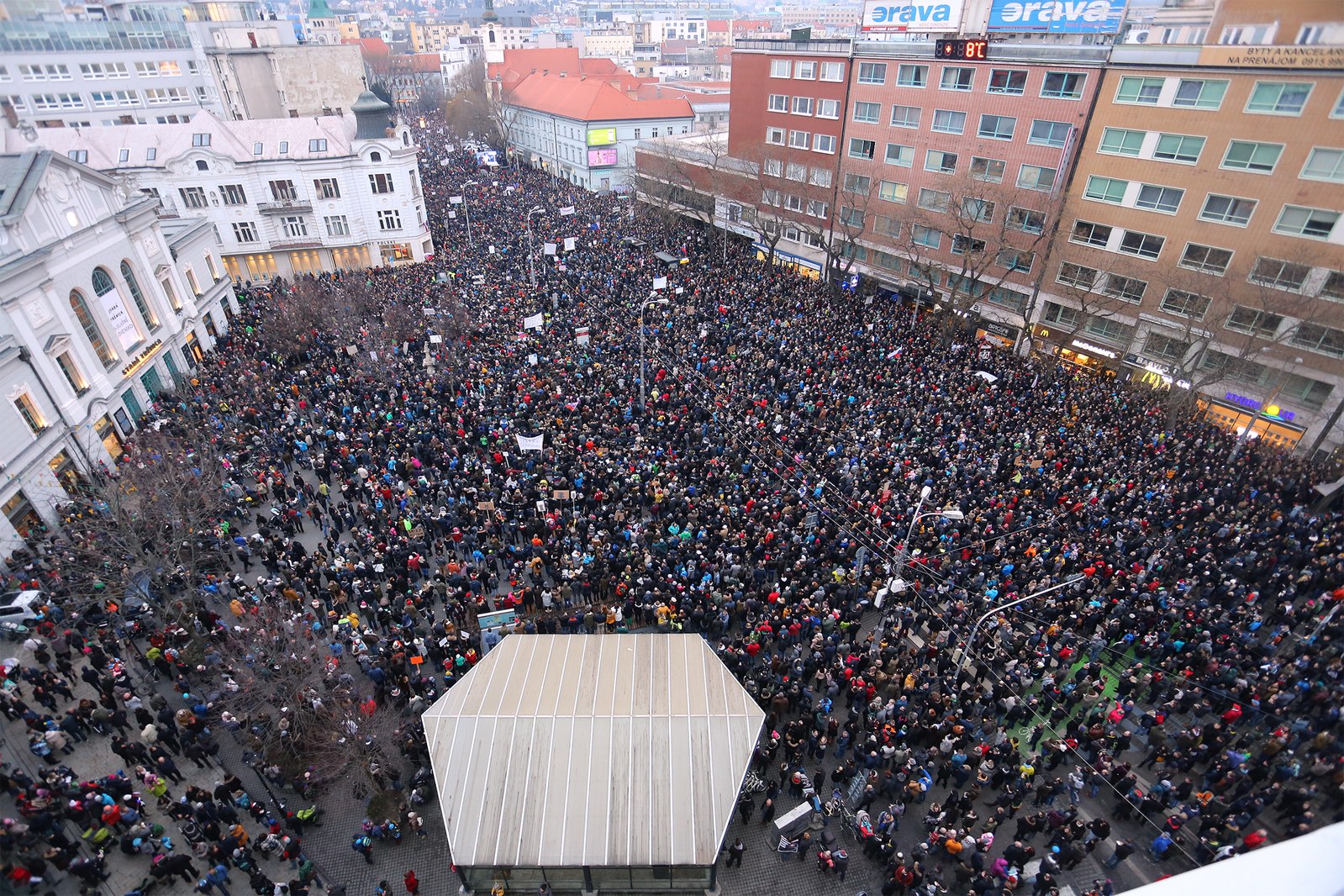
In Slovakia, widespread protests have erupted against Prime Minister Robert Fico’s government, which has been accused of corruption and leaning toward pro-Russian policies. The situation escalated after Fico’s controversial statements about Ukraine and his meeting with Russian President Vladimir Putin in December 2024. Demonstrations in Bratislava, where protesters waved EU and Slovak flags, have echoed a growing call for change. Many Slovaks feel that Fico’s government is undermining their sovereignty and undermining democratic values, particularly after the meeting with Putin and his overtly pro-Russian rhetoric. As a result, the European Union and the United States are considering imposing sanctions on Fico’s government.
Serbia is facing its own wave of political unrest as demonstrations against President Aleksandar Vučić’s government continue. Accusations of corruption and autocratic rule have fueled widespread dissatisfaction across both liberal and nationalist factions. Vučić’s government, which attempts to navigate a delicate balancing act between Europe and Russia, has found itself increasingly isolated. While publicly stating that he intends to steer Serbia toward EU membership, Vučić has been accused of undermining democratic freedoms, including curbing media independence and restricting political opposition. Protests in Belgrade, as well as student strikes following the collapse of a railway station canopy that some blame on poor reconstruction work, have highlighted public disillusionment.
Romania, too, is bracing for political upheaval as a rerun of its presidential election is set for May 2025. The annulment of the first round, following allegations of Russian interference, has left the nation divided. On one side, supporters of the pro-Russian candidate Georgescu rally in the streets, while pro-European factions back Lasconi, an opposition leader with a clear pro-Western agenda. Russia’s backing of its candidate and its attempts to influence the outcome of the election underscore the ongoing geopolitical struggle for influence in Eastern Europe. Romania faces a critical juncture that could determine its future alignment, whether toward Europe or toward Moscow.
Moldova, a country caught between competing Russian and European interests, is preparing for parliamentary elections against the backdrop of Russia’s failure to win the presidential election and Moldova’s referendum supporting EU integration. The situation in Moldova remains tense, with Russia continuing its efforts to destabilize the region, particularly through its support of the separatist Transnistrian region. Moldova’s leadership is now focused on mitigating Russia’s influence, but the task is becoming more complex as Russia has shifted tactics from supporting individual candidates to seeking to control broader political movements. The prospect of military escalation in Transnistria remains a significant concern for Moldova, particularly as the region is now facing severe energy shortages.
In Hungary, opposition to Prime Minister Viktor Orbán’s government continues to grow. Orbán’s government, accused of corruption and increasingly authoritarian behavior, faces regular anti-government protests in major cities. Despite this, Orbán’s party remains firmly in power, but the emerging political movement led by Peter Magyar could signal a shift toward more democratic and pro-European values. The United States has also imposed sanctions on members of Orbán’s government, further highlighting the growing international pressure on Hungary.
In Germany, parliamentary elections set for February 2025 promise to reshape the country’s political landscape. The current coalition government, led by the Social Democrats, Greens, and Free Democrats, is expected to lose significant ground to the Christian Democratic Party which has been gaining momentum under the leadership of Friedrich Merz. Merz’s firm stance against Russia and his efforts to counteract its influence in Europe has positioned the CDU as the frontrunner. However, the rise of the far-right Alternative for Germany (AfD), with its openly pro-Russian policies, has added another layer of complexity to the election. The AfD’s success represents a growing concern for the EU, as it signals the rise of anti-European and pro-Russian sentiment within Germany, a crucial EU member state.
Ukraine’s energy policies are becoming a central issue in Europe’s energy future, particularly with the recent cut in Russian gas supplies to Europe via Ukraine. While Slovakia and Hungary have expressed outrage over the situation, Ukraine’s decision to halt gas deliveries to Slovakia in retaliation for Ukraine’s decision to stop importing Russian gas reflects the broader geopolitical tensions at play. Ukraine’s energy policies, however, are closely tied to its ongoing war with Russia, and the outcomes of the current conflict will likely determine the nation’s future political alignment and energy security.
On the global stage, the U.S. and EU face a range of challenges. While the U.S. pushes for increased militarization and greater defense spending within the EU, the unpredictable nature of U.S. foreign policy under former President Donald Trump has created uncertainty in Europe. The EU, recognizing the need to strengthen its own defense and political unity, is grappling with the challenges posed by Russia’s ongoing efforts to destabilize the region. The rise of populist and pro-Russian movements within EU member states only complicates this effort, as Russia seeks to sow division and support anti-EU forces from within. The EU’s response to Russia’s political and military threats will be critical in determining the future of European unity and security.