— by Tsira Erkvania —
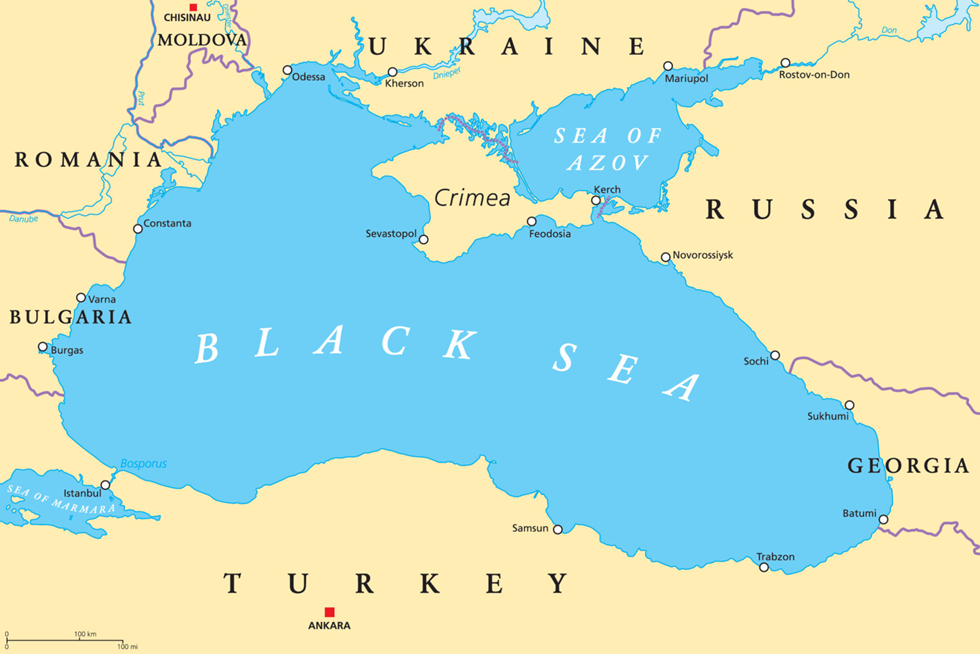
Since Russia’s 2008 invasion of Georgia and its 2014 occupation of Crimea, the geopolitical and security landscape of the Black Sea Region has undergone a profound transformation. The region, once a peripheral theater of international conflict, has emerged as a central axis in the global competition for influence, especially after Russia’s aggressive territorial expansions and military buildups. The shifting balance of power in the Black Sea has not only reshaped the security dynamics in Europe but also set the stage for heightened tensions between different powers, especially Russia, Türkiye, and China.
The Black Sea has long held strategic significance for Russia, which views the region as essential to its military and economic interests. With the annexation of Crimea, Russia strengthened its position in the region, gaining control of key naval facilities and port access. Russia’s naval power is experiencing a historic decline, with the Black Sea Fleet suffering substantial losses and retreating strategically.
Ukraine, which historically lacked a significant conventional navy, has managed to erode Russia’s naval superiority in the region. Through a series of asymmetric attacks utilizing unmanned surface vehicles (USVs) and air strikes, Ukraine has inflicted significant damage on Russia’s Black Sea Fleet, including the sinking of the flagship cruiser Moskva. This series of Ukrainian successes has effectively diminished Russia’s ability to blockade Ukrainian ports, ensuring Ukraine’s continued access to the Black Sea. The sinking of the Moskva symbolized the collapse of Russia’s naval blockade and marked a turning point in the maritime conflict. The western Black Sea is now a contested theater, where Russia struggles to regain control over vital maritime routes.
Türkiye’s Strategic Position
As the key gatekeeper to the Black Sea, Türkiye has a pivotal role in shaping regional dynamics. Although Ankara has maintained diplomatic and economic ties with Moscow, its relationship with Kyiv has grown increasingly strategic, particularly in the defense sector. Türkiye sees Ukraine as a critical partner in balancing Russian power in the region. Türkiye’s policy objectives revolve around preventing Russia from achieving maritime dominance, safeguarding Ukraine’s territorial integrity, and avoiding an escalation into a broader NATO-Russia conflict.
Türkiye’s strategic role is amplified by the Montreux Convention, which limits the entry of non-littoral states into the Black Sea. While Türkiye has at times demonstrated a flexible approach to its foreign policy, balancing its interests with both Russia and the West, its long-term strategy focuses on ensuring that Ukraine remains sovereign and capable of resisting Russian expansion. Ankara has been careful to avoid openly challenging Russian naval forces, yet its support for Ukraine’s maritime campaign has contributed to the erosion of Russia’s naval power.
The Emergence of China’s Influence
While Russia’s presence in the Black Sea has been met with increasing resistance, China’s role in the region remains more indirect but no less significant. Though Beijing has no immediate ambitions to directly engage in the Black Sea conflict, its growing investments in infrastructure and strategic projects in the wider Black Sea region have made it a key player in the broader geopolitical landscape. From the Western Balkans to the South Caucasus, China has increased its presence through investments in transport routes, energy infrastructure, and port facilities. Particularly in Georgia, China has become a prominent investor, fostering deeper economic ties with countries in the region while leveraging its growing influence.
Beijing is closely monitoring the Ukraine conflict, learning from Russia’s strategies and missteps, and testing the West’s resolve to uphold international norms. While China has presented itself as a neutral peacemaker, its proposals often align closely with Russia’s demands, and it is not seen as a credible mediator in the conflict. The growing nexus between Russia, Iran, China, and North Korea has significant implications for the Black Sea and Eastern Mediterranean, as these countries coordinate efforts to circumvent Western sanctions and expand their influence in the region.
The Russia-Iran-China Axis
The evolving military and strategic cooperation between Russia, Iran, and China in the Black Sea is reshaping the security environment in the region. What began with Iran’s supply of drones to Russia has grown into a broader strategic partnership. This alliance now includes joint arms production, modernization of military infrastructure, and increased cooperation in areas such as space and cyber capabilities. Iranian drones and loitering munitions used to attack Ukrainian ports and infrastructure pose not only a direct threat to Ukraine but also a long-term challenge to NATO allies in the region.
The growing alliance between Russia and its partners has intensified security challenges in the Black Sea, as they work to counter Western influence. With NATO and the EU expanding their presence in the Eastern Mediterranean, the region’s security concerns are more interconnected than ever.
The Strategic Importance of the Black Sea
The Black Sea holds significant strategic value for Russia, as control over Ukraine’s coastline and ports like Odesa is critical to weakening Ukraine’s sovereignty and limiting its global market access. By asserting control over the Black Sea, Russia would dominate key maritime trade routes, energy flows, and military access, thereby weakening Ukraine’s sovereignty and diminishing its strategic value to the West.
In the face of these challenges, the West must support Ukraine’s ability to defend its coastline and maintain its access to the Black Sea. The success of Ukraine’s asymmetric campaign against Russia’s navy highlights the importance of continued Western military support, including advanced technologies and strategic intelligence. By weakening Russia’s naval presence, Ukraine can secure its ports and maintain critical exports, ensuring its economic survival.
Long-Term Implications for Regional Security
Looking beyond the immediate conflict, the Black Sea is likely to remain a key battleground in the contest for regional and global power. As Russia seeks to regain its maritime supremacy, it will face continued resistance from Ukraine and its regional partners, including Türkiye. The broader strategic competition in the region is further complicated by China’s growing influence and the emergence of a Russia-Iran-China axis, which presents new challenges for NATO and the EU.
Ultimately, the future of the Black Sea will depend on the balance of power between these great powers. Ukraine’s success in defending its coastline and the region’s maritime lanes will be crucial to its continued sovereignty and independence. By ensuring Ukraine’s success, the West can contain Russia’s ambitions and secure the Black Sea as a space for cooperation, trade, and security, rather than a theater for military expansion. In this new era of great power competition, the Black Sea is more than just a geographical space, it is a decisive arena for shaping the future of European and global security.