— by Tsira Erkvania —
For decades, Georgia has navigated cycles of political upheaval characterized by moments of promise and subsequent setbacks. Landmark events in 1992, 2003, and now 2024, each marked as opportunities for transformation, have instead entrenched issues like corruption, mismanagement, and political inertia. As a result, Georgia’s aspirations for stable governance and deeper ties with Europe face significant threats.
At the heart of Georgia’s ongoing struggles lies its historical identity as a nation intrinsically linked to European culture and values. Situated at the crossroads of Europe and Asia, Georgia has long viewed itself as part of the European sphere, a position rooted in its Christian heritage and strategic geopolitical significance. This connection is not a modern construct, but one that stretches back centuries, exemplified by Sulkhan-Saba Orbeliani’s 1714-1715 mission to Europe. Orbeliani’s mission was not only a diplomatic endeavor but also a profound declaration of Georgia’s cultural and political aspirations to align itself with Europe. Although the mission ultimately failed to achieve its immediate objectives, the intellectual and symbolic significance of the effort has had a lasting impact. This synthesis laid the groundwork for a vision of Georgia as a nation connected to Europe through shared cultural and intellectual heritage.
The desire for European integration has remained a consistent theme throughout Georgia’s history, manifesting in efforts to align politically and culturally with European institutions. From the collapse of the Soviet Union to the aspirations of the 21st century, Georgia has repeatedly sought to secure its place within the European community. Despite a strong public desire for integration, the country’s political landscape has been marred by a failure of leadership to capitalize on the opportunities presented by a shifting geopolitical order. Russia’s military actions in Ukraine have significantly altered the geopolitical landscape of Europe, marking the emergence of a new regional order. This transformation is particularly evident in both the northern and southern regions of the continent. In the north, Finland and Sweden’s accession to NATO represents a shift in security dynamics, as these countries, historically non-aligned, now seek protection under the alliance’s collective defense umbrella. Meanwhile, Moldova and Ukraine’s pursuit of EU membership and their recognition as candidate countries signal a shift in the balance of power and influence, with both nations moving closer to European integration.
Russia’s territorial ambitions and revisionist actions have effectively made EU enlargement a strategic imperative, not just a political option. What was once a point of contention between Paris and Berlin—the pace and scope of enlargement—has now transformed into a matter of urgent necessity. For Georgia, these shifts have created new opportunities. The evolving dynamics of European integration and the redefinition of Europe’s borders have opened doors that were previously closed. However, the Georgian political elite has failed to fully capitalize on these opportunities. Despite a long-standing desire within the Georgian population to rejoin the European family, the nation has become increasingly disillusioned. The missed opportunities and a lack of decisive action from the political leadership have led to growing frustration among the Georgian people, who continue to look toward Europe as a beacon of hope and stability, yet see their path blocked by internal political challenges. The future of Georgia’s European aspirations now depends on overcoming these obstacles and aligning with the broader strategic shifts taking place in the region.
Georgian Dream’s Transformation: From Reformist Promise to Oligarchic Rule
The Georgian Dream party, once lauded as a symbol of reform and progress, has evolved into a tightly controlled entity dominated by the shadowy influence of its founder, Bidzina Ivanishvili. Although Ivanishvili officially stepped back from politics, his behind-the-scenes control has turned the party into a closed system that prioritizes the interests of elites over democratic values.
In 2024, this drift towards authoritarianism became undeniable. The revival of the controversial “Transparency of Foreign Influence” law in April, aimed at silencing civil society, provoked widespread public backlash. Although protests forced the government to shelve the law temporarily, the episode significantly eroded public trust. Later, allegations of electoral fraud during the October parliamentary elections further deepened skepticism about the government’s commitment to democratic principles, sparking nationwide protests.
The crisis deepened in November 2024 when Prime Minister Irakli Kobakhidze announced the suspension of EU accession talks until 2028. This decision struck at the heart of Georgia’s national aspirations, as closer ties with Europe have long been viewed as essential for democracy, stability, and security against Russian aggression. Public opinion overwhelmingly supports EU integration, making the government’s decision not only unpopular but a perceived betrayal of Georgia’s core values. Protests quickly erupted, spreading far beyond the capital and uniting diverse groups in their demand for accountability and a recommitment to European ideals.
The ruling party’s decision to stall EU negotiations has not only alienated the public but also created divisions within state institutions. Prominent officials in defense and foreign affairs, along with respected diplomats, have publicly criticized the government’s direction, with many resigning in protest. These fractures within the government’s institutional framework are compounded by international backlash, as key partners like the European Union and the United States have paused crucial collaborations, leaving Georgia increasingly isolated on the global stage.
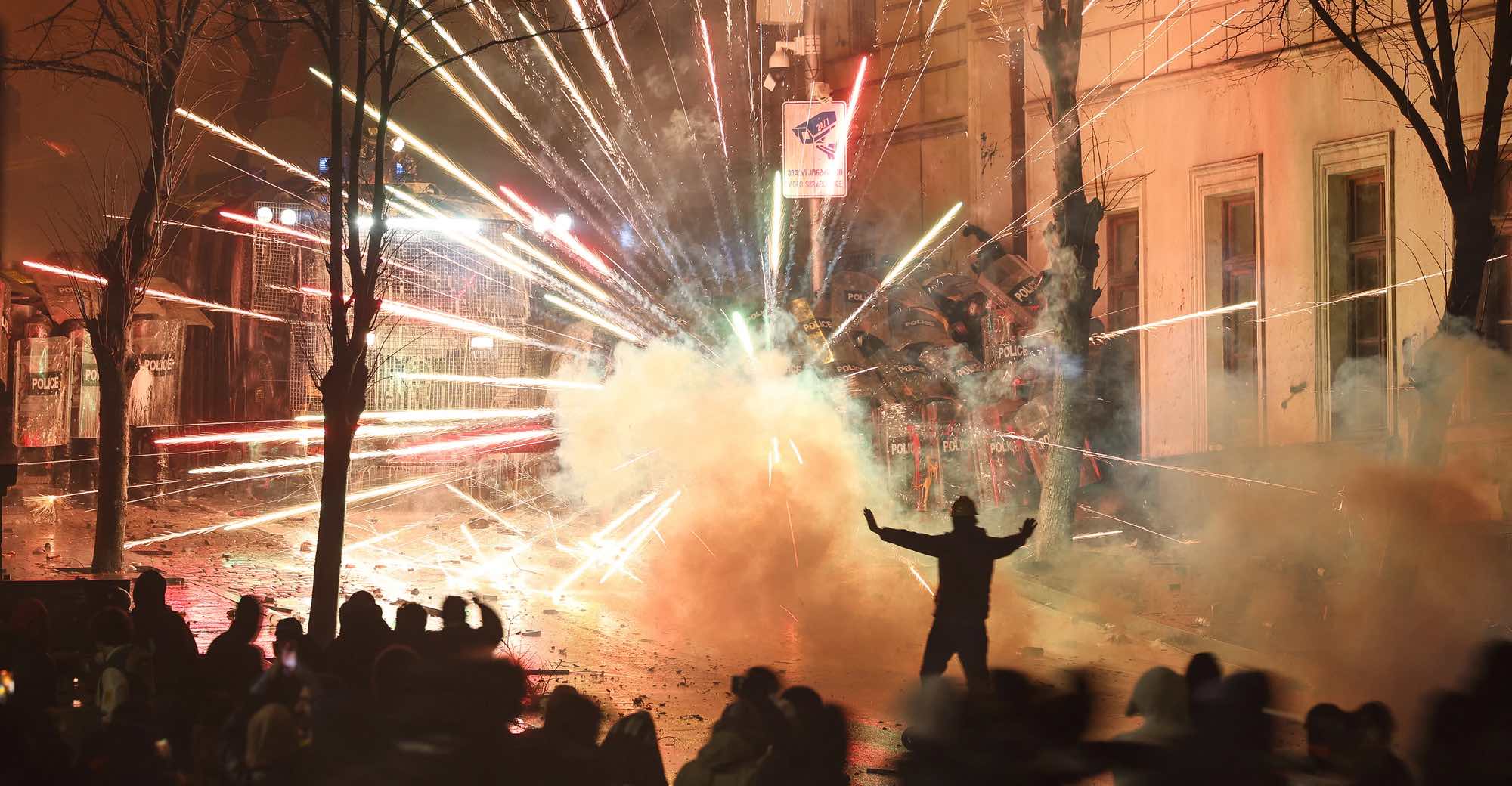
The mass protests that began in response to the EU decision have since broadened to encompass wider grievances against the government, including allegations of authoritarianism, corruption, and alignment with Moscow’s interests. The government’s response has been marked by heavy-handed tactics, including the use of tear gas, water cannons, and widespread arrests of activists and journalists. Despite these measures, the protests continue to grow, reflecting the determination of citizens to demand change.
Georgia at the Heart of a Geopolitical Struggle
Georgia’s current crisis is part of a larger geopolitical contest between democratic and autocratic influences in the region. The country’s strategic position and aspirations for Euro-Atlantic integration make it a critical player in this struggle. The parallels to Ukraine’s Maidan protests and Belarus’s pro-democracy movements are evident, as public demands for reform clash with government actions that increasingly echo Kremlin-style tactics. Russia’s influence looms large, as the Kremlin has historically sought to undermine democratic movements in its neighboring states.
Georgia’s political crisis underscores the need for systemic reforms to address entrenched issues of governance and accountability. Breaking free from cycles of stagnation and authoritarianism will require both domestic and international efforts. This pivotal moment is not just about Georgia’s future but also about the broader contest for democracy in the region. The resolve of the Georgian people, evident in their unwavering support for European ideals, offers hope that the country can overcome its current challenges and forge a path toward a more democratic and stable future.